Why Universities Look Beyond Grades: Preparing Students for a Future We Cannot Yet Predict
An excellent education should open doors. But what happens when academic achievement alone is no longer enough to stand out?
For generations, families have understandably focused on grades, examinations and university acceptance rates as measures of educational success. And while strong academic results remain essential, many universities are interested in something that cannot be captured by a transcript alone: the person behind the grades.
Can a student think critically? Can they collaborate with people from different backgrounds? Can they communicate confidently, manage competing priorities, overcome setbacks and approach unfamiliar challenges with curiosity?
And perhaps most importantly, are they prepared for a future that none of us can fully predict?
At the International School of Düsseldorf (ISD), these questions sit at the heart of our educational philosophy.
Through the International Baccalaureate (IB), a rich curriculum spanning academics, the arts, music, theatre and sport, and opportunities to participate in international competitions, we aim to develop more than academically successful students.
We aim to develop adaptable, thoughtful and capable young people who are ready to make their mark on the world.
Outstanding Academics and an Inclusive Approach: Why Families Shouldn't Have to Choose
At ISD, academic excellence and an inclusive education are not competing priorities. We believe they belong together.
Our students consistently achieve excellent International Baccalaureate Diploma results, including individual scores at the very highest level of the IB's internationally recognised 45-point scale.
In 2026, our IB Diploma candidates achieved a 92% pass rate, an average score of 33 points against a global average of approximately 30.8, and a highest individual score of 45 out of 45. Fourteen per cent of our candidates achieved scores between 40 and 45 points.
These are results we are immensely proud of. They reflect the dedication of our students, the expertise of our teachers and the strength of our academic programme.
But what makes ISD special is not simply the results our students achieve. It is our commitment to helping a broad range of learners reach their potential.
We believe an excellent international education should not be defined solely by selecting students who are already high academic achievers. It should be defined by the quality of teaching, the support provided and the opportunities available for students to grow.
At ISD, we recognise that every child brings different strengths, interests, ambitions and ways of learning.
Some students will excel in mathematics or science. Others will discover their strengths through literature, the arts, music, theatre, sport or leadership. Many will surprise themselves by discovering talents in areas they have never explored before.
Our responsibility as educators is to challenge students academically while giving them the support, encouragement and opportunities to develop across these different areas.
We are proud of our academic achievements. But we are equally proud that our students have opportunities to step onto a stage, represent their school internationally, compete in robotics or mathematics, participate in music ensembles and contribute to their communities.
Because academic excellence should not come at the expense of a well-rounded education.
And a well-rounded education should never mean compromising on academic standards.
At ISD, we believe children deserve both.
Universities Are Looking for More Than Academic Results
There is a common misconception that securing a place at a leading university is simply a matter of achieving the highest possible grades.
The reality, particularly at universities that use holistic admissions, is more nuanced.
Harvard University, for example, considers community involvement, leadership, extracurricular achievements and personal character alongside academic performance.
The Massachusetts Institute of Technology (MIT), one of the world's leading institutions for science and technology, also looks beyond academic results. Its admissions guidance highlights curiosity, initiative, collaboration and the ability to balance academic commitments with other interests.
Importantly, MIT makes clear that it is not about participating in as many activities as possible. What matters is genuine interest, commitment and making meaningful use of the opportunities available.
These are not just desirable qualities for university admissions. They are qualities that help young people succeed in life.
A student who has balanced demanding coursework with rehearsals for a theatre production has practised time management, commitment and responsibility.
A student who has represented their school at an international mathematics or robotics competition has experienced problem-solving, perseverance and collaboration under pressure.
A student who has competed as part of a sports team has learned to communicate, accept feedback, support others and respond to setbacks.
These experiences reveal something that grades alone cannot always show.
They reveal how a student thinks, works, contributes and grows.
University admissions systems differ around the world, and academic qualifications remain especially important for many UK and European programmes. But the wider skills students develop through these experiences remain valuable regardless of where they choose to study.
The IB Difference: Learning to Ask Why
At ISD, our approach is rooted in the philosophy of the International Baccalaureate (IB), which places inquiry, reflection and critical thinking at the centre of learning.
While examination-driven approaches can sometimes place considerable emphasis on memorisation, repetition and arriving at the correct answer, the IB asks students to go further.
Why is that the answer? How did you arrive at your conclusion? What evidence supports your argument? Could there be another perspective? What happens if the circumstances change?
The distinction is important.
Memorising information can demonstrate knowledge. Understanding how to evaluate, question and apply that information demonstrates something much more powerful.
The IB Diploma Programme reflects this philosophy through its three core components:
- Theory of Knowledge (TOK) challenges students to examine how knowledge is constructed, what counts as evidence and how different perspectives influence our understanding.
- The Extended Essay requires students to undertake independent research, formulate questions, evaluate sources and develop sustained arguments.
- Creativity, Activity and Service (CAS) encourages students to engage in creative pursuits, physical activity and meaningful contributions to their communities.
Together, these elements ensure that academic learning is connected to independent thinking, personal development and real-world experiences.
And this philosophy begins long before students enter the Diploma Programme.
Through inquiry-based learning, ISD students are encouraged to ask questions, explore possibilities, reflect on their thinking and take ownership of their learning from an early age.
Because education should not simply teach children what to think.
It should teach them how to think.
The Arts Are Not an Afterthought
One of the defining characteristics of an ISD education is the importance we place on providing children with a broad range of experiences.
Theatre, music and the visual arts are not simply optional activities reserved for children who already know they have a particular talent or interest.
They are meaningful parts of our educational programme.
There is an important difference between offering a drama club after school and ensuring that children experience drama and performance as part of their learning.
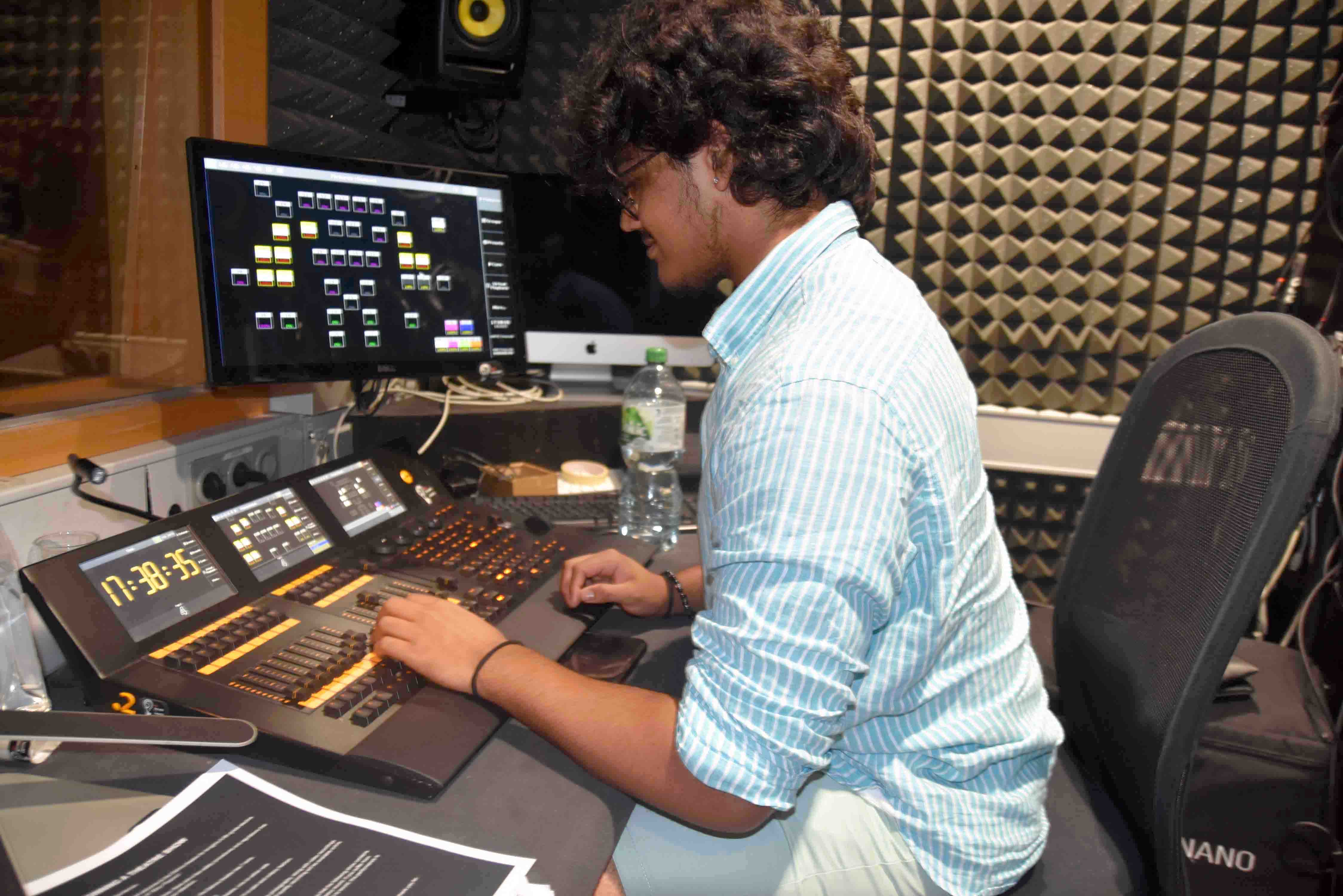
At ISD, exposure to the performing and visual arts is built into the curriculum, giving students opportunities to explore creative expression, develop confidence and discover interests they may never otherwise have considered.
A child who has never stepped onto a stage might discover a love of acting.
A student who initially feels uncomfortable performing in front of others might develop the confidence to speak to an audience.
A young musician might discover the discipline and satisfaction of performing as part of an ensemble.
These experiences matter, even for students who never intend to pursue a career in the arts.
Theatre develops communication, empathy and the ability to see the world through another person's perspective. Music requires listening, discipline and collaboration. Visual arts encourage creativity, interpretation and the confidence to explore ideas without a single predetermined answer.
At ISD, students can also extend these experiences beyond the classroom through productions, concerts, ensembles and international opportunities such as the AMIS European Honour Choir.
The aim is not to turn every child into an actor, musician or artist.
It is to ensure that every child has the opportunity to discover what they might become.
From Robotics to International Sports: Opportunities to Go Beyond
The same philosophy extends well beyond the arts.
At ISD, learning does not stop when the school day ends, and opportunities are not limited to one discipline.
Our students have access to experiences across science, technology, engineering, mathematics, coding, robotics, the arts, music, theatre and sport.
Through academic challenges, STEM activities and international mathematics competitions, students can apply classroom knowledge to complex problems, collaborate with peers and test their abilities in new environments.
Through coding and robotics, they explore logical thinking, experimentation, innovation and the process of learning through trial and error.
Through international music events and performances, they connect with students from other schools who share their creative interests.
And through NECIS, the Northwest European Council of International Schools, our student athletes compete internationally, represent their school and develop friendships with young people across Europe.
These experiences are not simply additions to a university application.
They are opportunities for children to learn what it means to commit to something, practise consistently, manage their time, take responsibility and work with others towards a shared goal.
A student might discover that they enjoy mathematics but also love theatre. Another might be a talented athlete who develops an unexpected interest in coding. Another might find their confidence through music, leadership or community service.
At ISD, we believe children should have the opportunity to explore these possibilities before being expected to define their future.
Because sometimes the most important discovery a child makes at school is an interest or ability they did not know they had.
In the Age of Artificial Intelligence, Human Skills Matter More Than Ever
We are preparing children for a world that is changing at an extraordinary pace.
Artificial intelligence is already transforming how we access information, solve problems and work. Technologies that seemed unimaginable a decade ago are becoming part of everyday life.
And the pace of change is unlikely to slow.
According to the World Economic Forum's Future of Jobs Report 2025, analytical thinking remains the most sought-after core skill among employers. Resilience, flexibility, leadership, creative thinking and social influence also feature prominently.
As AI and technological capabilities develop, the ability to think independently, interpret information, communicate effectively and work with others becomes increasingly valuable.
Knowing an answer is useful.
Knowing whether that answer is reliable, understanding its implications and deciding what to do with it are different skills entirely.
This is where an inquiry-led education becomes particularly relevant.
An IB student is encouraged to question assumptions, evaluate evidence, consider alternative perspectives and explain the reasoning behind a conclusion.
These are precisely the habits young people need when navigating a world in which information is increasingly abundant, but sound judgement remains essential.
The future will require people who can work with technology without becoming dependent on it for their thinking.
People who can solve unfamiliar problems, communicate across cultures and respond constructively when circumstances change.
People who are not afraid to ask difficult questions.
And people who understand that technology may provide information, but human judgement, creativity and responsibility determine how that information is used.
Preparing Students for a Future We Cannot Yet Predict
Consider how much the world of work has changed in just the past 20 years.
Entire industries have emerged, careers have transformed and skills once considered essential have been replaced or redefined.
Many of today's students may eventually work in professions that do not yet exist.
So how do we prepare children for a future we cannot accurately describe?
We give them the ability to adapt.
We teach them to approach unfamiliar situations with curiosity rather than fear. To work with people who think differently. To communicate their ideas. To question what they are told. To learn from failure and recognise that there may be several ways to solve a problem.
We help them develop the confidence to enter a new environment, understand its challenges and find their place within it.
At ISD, our internationally diverse community adds another important dimension to this preparation.
With students representing more than 60 nationalities, children learn every day alongside peers whose experiences, perspectives and cultural backgrounds may be very different from their own.
International-mindedness is not simply something discussed in a lesson. It is part of everyday school life.
Learning to navigate these differences with respect, curiosity and confidence prepares students for universities, workplaces and communities that are increasingly interconnected.
More Than a Grade. More Than a Diploma.
Of course, academic excellence matters.
Strong grades demonstrate knowledge, discipline and achievement. They open doors to universities and create opportunities for further study.
And at ISD, our outstanding IB results demonstrate that a rigorous academic education and an inclusive, well-rounded approach can go hand in hand.
But grades are only one part of an excellent education.
A school should also help children develop confidence, discover their interests, build meaningful relationships and learn how to contribute to the world around them.
It should challenge them academically while giving them the freedom to explore creatively.
It should celebrate success while teaching students how to respond when things do not go to plan.
And it should prepare them not only for their next examination or university application, but for the many opportunities and challenges that lie beyond.
At ISD, we do not believe families should have to choose between outstanding academics and a well-rounded education.
Our students achieve excellent IB results while benefiting from an inclusive, internationally minded environment that encourages them to explore their interests, discover their strengths and go beyond what they thought possible.
We cannot predict exactly what the future will look like.
But we can give our students the knowledge, skills and confidence to help shape it.
Because the future belongs not only to those who know the answers, but to those who know how to ask the right questions.
That is how we Go Beyond at ISD.
DISCOVER CAREER & HIGHER EDUCATION PLANNING AT ISD


